The Art of World-Building in Fantasy and Sci-Fi Stories
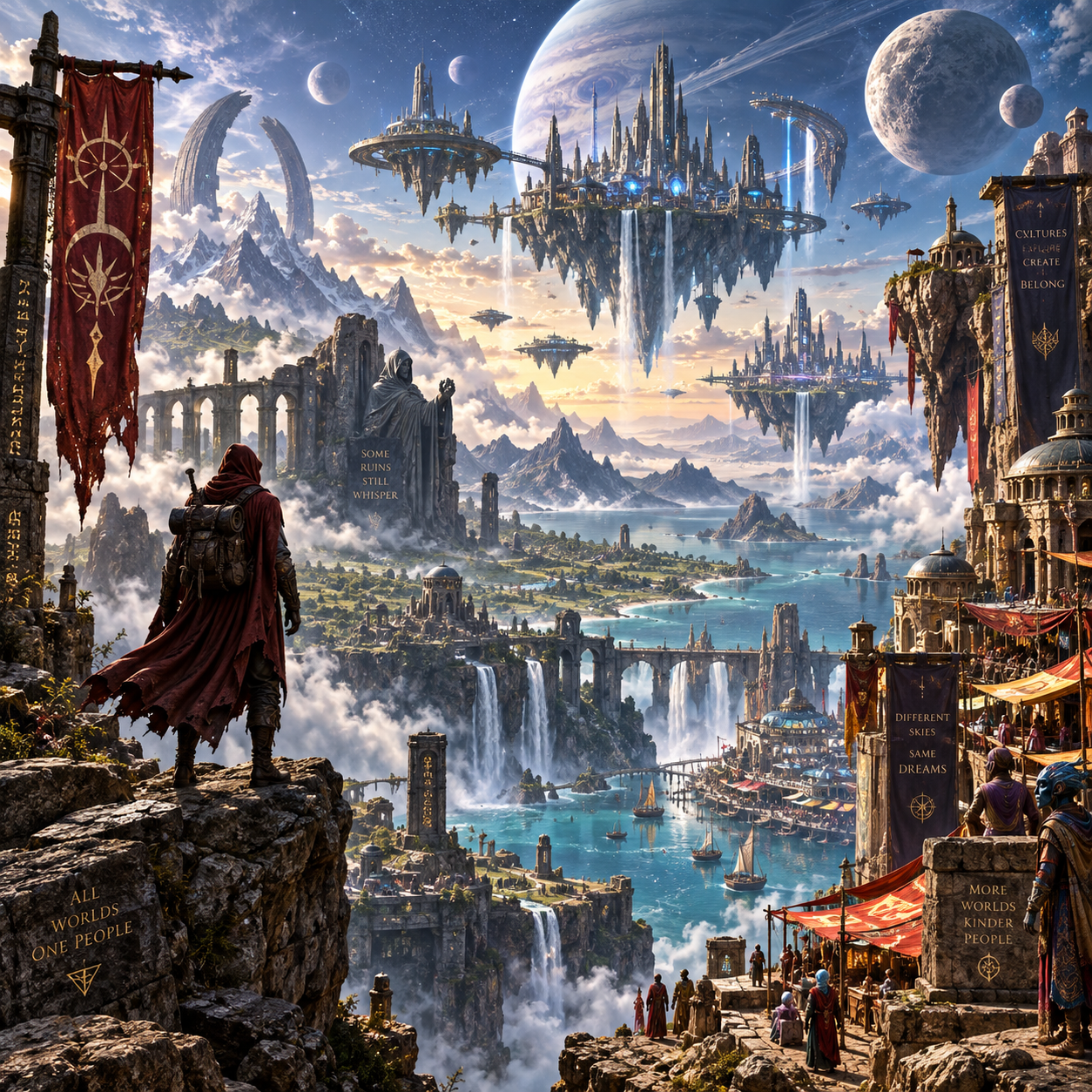
World-building gives a fantasy or science-fiction story its physical, cultural, and emotional foundation. It determines what people fear, what they value, how they survive, and which choices can change their lives. A memorable setting does more than look impressive: it creates pressure on characters and gives the plot somewhere meaningful to go.
For writers publishing online fiction stories, world-building works best as a practical storytelling tool. You do not need to design every continent, species, or century before writing chapter one. You need enough structure to make the world feel consistent, inhabited, and capable of producing consequences.
What Makes World-Building Effective?
Effective world-building combines believable rules, internal consistency, atmosphere, and purposeful detail. Readers accept impossible ideas when the fictional world follows its own logic and shows how those rules affect ordinary life.
Consistency creates trust. If a magic system can heal a fatal wound in one chapter but cannot close a minor cut in another, readers will notice unless the story explains the difference. The same principle applies to science-fiction technology, political institutions, geography, and history. Every major feature should have understandable causes and consequences.
Atmosphere comes from specific sensory details rather than long descriptions. A city might smell of salt and machine oil, display weather warnings in three languages, and ration electricity after sunset. Those details communicate geography, technology, culture, and social tension at the same time.
A useful test is the rule, pressure, evidence framework:
- Rule: What can or cannot happen in this world?
- Pressure: Who benefits from that rule, and who suffers?
- Evidence: How will readers encounter it through action, dialogue, objects, or institutions?
This keeps world-building connected to story. A detail earns its place when it changes a decision, reveals a relationship, complicates a goal, or deepens the reader’s understanding of the setting.
Start with the Foundations of Your World
To build a strong fictional world, begin with geography, history, politics, resources, religion, and the forces that shape everyday life. These foundations explain why communities exist where they do and why people behave as they do.
Start with geography. Mountains can isolate populations, rivers can create trade routes, and scarce water can turn a border into a permanent source of conflict. In science-fiction fiction, orbital distance, gravity, radiation, and access to fuel may shape settlement patterns just as strongly.
Next, sketch the world’s history and mythology. You do not need a complete chronology. Choose three to five past events that still influence the present, such as a failed revolution, a religious schism, a lost migration, or the collapse of an advanced civilization. History becomes useful when characters inherit its consequences.
Then examine power and resources:
- Who controls food, water, land, data, energy, transportation, or magical materials?
- Which laws protect the powerful?
- What work keeps society functioning?
- What does an ordinary person fear losing?
- Which public story about the past differs from the truth?
For an online fiction project, try a one-page foundation sheet. Draw a rough map, write a short timeline, name two political powers, describe one religious belief, and identify one resource everyone depends on. This limited scope leaves room for discovery while giving your opening chapters a stable framework.
Designing Magic Systems and Advanced Technology
Magic systems and advanced technology feel convincing when they have clear capabilities, limitations, costs, and consequences. The more powerful a system is, the more carefully the story must define what prevents it from solving every problem.
In fantasy fiction, decide whether magic is rare or common, learned or inherited, public or secret. Establish what using it requires. A spell might consume physical stamina, depend on spoken language, damage memory, require a scarce mineral, or attract an intelligent force. The limitation should create choices rather than merely decorate the lore.
Science-fiction technology needs the same discipline. Consider who invented it, who maintains it, who can afford it, and what happens when it fails. Faster-than-light travel, artificial intelligence, cloning, cybernetic implants, and terraforming all carry social consequences. Technology changes jobs, warfare, family structures, law, and ideas about identity.
Use the capability-cost-consequence model:
- Capability: What can this magic or technology do?
- Cost: What must someone spend, risk, or sacrifice to use it?
- Consequence: How has society adapted to its existence?
Hard magic systems and carefully explained technologies suit plots built around strategy, investigation, and problem-solving. Soft magic systems can create mystery and wonder, especially when their uncertainty supports theme or myth. Neither approach is automatically better. The key is matching the system’s clarity to the kind of tension your story promises.

Build Cultures, Societies, and Conflicts
Believable cultures and societies grow from shared conditions, while compelling conflicts emerge from opposing interests within and between those groups. Customs feel real when they affect work, family, law, language, status, and daily choices.
A culture is not a costume or a list of exotic names. It includes ideas about childhood, death, hospitality, privacy, property, gender, education, justice, and authority. Ask what people praise publicly and what they do privately. Contradictions make societies feel lived-in: a community may celebrate equality while preserving inherited privilege, or preach peace while depending on conquest.
Develop language carefully. A few recurring terms, forms of address, proverbs, or translation problems can reveal relationships without slowing the story. Avoid filling chapters with invented terminology that readers must memorize. One precise cultural detail usually does more work than ten unfamiliar labels.
Build factions around interests rather than simple morality. A merchant guild may oppose a royal family because tariffs threaten trade. A religious movement may reject a new technology because it challenges sacred history. A rebel group may agree on its enemy but disagree about what should replace the existing government.
For a quick exercise, create two communities that depend on the same river, spaceport, magical resource, or communication network. Give each group a different origin story and a different definition of fairness. Their conflict will emerge naturally from the setting.
Connect the World to Characters and Plot
World-building supports character and plot when the setting shapes goals, identity, obstacles, relationships, and stakes. A character should be unable to make the same choices in a different world.
Give each major character a relationship to the world’s central systems. One might benefit from an empire, another might be displaced by it, and a third might believe its official history. Their backgrounds influence what they notice and what they misunderstand. A trained navigator sees routes; a political exile sees checkpoints; a child sees forbidden places to explore.
Setting can also turn internal conflict into visible action. A character ashamed of their magical ancestry may refuse an ability that could save a friend. An astronaut who distrusts artificial intelligence may depend on an adaptive ship. A noble heir who wants personal freedom may discover that abandoning their title would expose thousands of people to exploitation.
Use a simple chain when planning scenes: world condition → character pressure → choice → consequence. For example, a city’s water monopoly pressures a courier to steal a treatment formula. The theft saves one neighborhood but destabilizes negotiations between rival districts. The world produces the plot, and the plot reveals the character’s values.
This approach also prevents setting from becoming decorative. If a detail never affects a decision, mood, relationship, or discovery, consider reducing it or saving it for later.
Reveal the World Without Overwhelming Readers
Reveal world-building through action, dialogue, sensory detail, discovery, and selective exposition. Readers absorb unfamiliar information more easily when it solves an immediate problem or changes their interpretation of a scene.
Instead of explaining an empire’s entire legal system, show a character hiding an unregistered family member during a checkpoint inspection. Rather than describing a planet’s climate for a page, let a failing pressure seal force the crew to choose between two dangerous routes. Context becomes memorable when it carries stakes.
Use the one-scene, one-revelation rule while drafting. A scene may introduce a custom, a political tension, and a piece of technology, but one element should usually receive the reader’s main attention. Later scenes can complicate or contradict that first impression.
- Let dialogue reveal what characters assume rather than what everyone already knows.
- Use objects such as ration cards, ceremonial tools, damaged maps, or obsolete devices as evidence of history.
- Explain unfamiliar terms through context before defining them directly.
- Allow characters to misunderstand the world, especially when reliable information is part of the conflict.
- Place necessary background close to the moment when readers need it.
Online fiction rewards momentum. A compelling opening chapter usually needs only enough world detail to establish a problem, a place, and a reason to continue reading.
Common World-Building Mistakes to Avoid
The most damaging world-building mistakes are inconsistency, unnecessary complexity, generic design, unexplained rules, and details that do not serve the story. Each problem weakens reader trust or delays the narrative.
Changing rules for convenience
Writers sometimes alter magic, technology, geography, or political power whenever the plot reaches a difficult moment. This happens because a dramatic solution feels exciting in the draft. The result is reduced tension: readers stop believing that earlier limitations matter. Keep a private rule sheet and revise the setup if a genuine exception becomes necessary.
Creating complexity before creating conflict
A detailed calendar, genealogy, or invented language can feel productive, but it may not improve the story. Writers often build complexity to postpone difficult decisions about characters and plot. Start with the pressures your protagonists face, then develop only the history and institutions that intensify those pressures.
Using a generic setting with new names
Changing the names of kingdoms or planets does not create cultural depth. This mistake usually comes from borrowing familiar fantasy or science-fiction patterns without asking how geography, resources, and history changed the society. Add one distinctive cause-and-effect relationship: perhaps daylight is privately owned, memory is a legal currency, or migration determines citizenship.
Explaining every mystery immediately
Unexplained elements can create curiosity, but readers need enough evidence to form questions. Over-explaining kills discovery; under-explaining feels arbitrary. Reveal rules when characters must act on them, and distinguish a deliberate mystery from information the author has not yet designed.
Frequently Asked Questions About World-Building
How much world-building does a fantasy or sci-fi story need?
A story needs enough world-building to make its setting understandable, its conflicts credible, and its character choices meaningful. Begin with the locations, rules, institutions, and history that directly affect the current plot. Expand the world as new story problems require it.
Should writers create the entire world before writing the story?
No. Some writers prefer extensive planning, while others discover the setting through drafting. A practical compromise is to establish the opening location, major rules, central conflict, and immediate social pressures before writing, then develop the wider world when the narrative demands it.
What is the difference between hard and soft magic systems?
Hard magic systems define abilities and limitations clearly, allowing readers to understand how characters solve problems. Soft magic systems preserve more mystery and uncertainty. Hard systems often support tactical plots, while soft systems can emphasize wonder, symbolism, or myth.
How can world-building support character development?
Make the world challenge a character’s beliefs, status, identity, or survival. A character’s response to law, religion, technology, class, or cultural expectations can reveal who they are more effectively than description alone.
How do you avoid overwhelming readers with fictional history and terminology?
Introduce terms through context, limit new concepts in each scene, and connect explanations to immediate stakes. Keep a private reference document for yourself, but give readers only the information they need to understand the present action.