Exploring Different Fiction Genres: From Romance to Horror
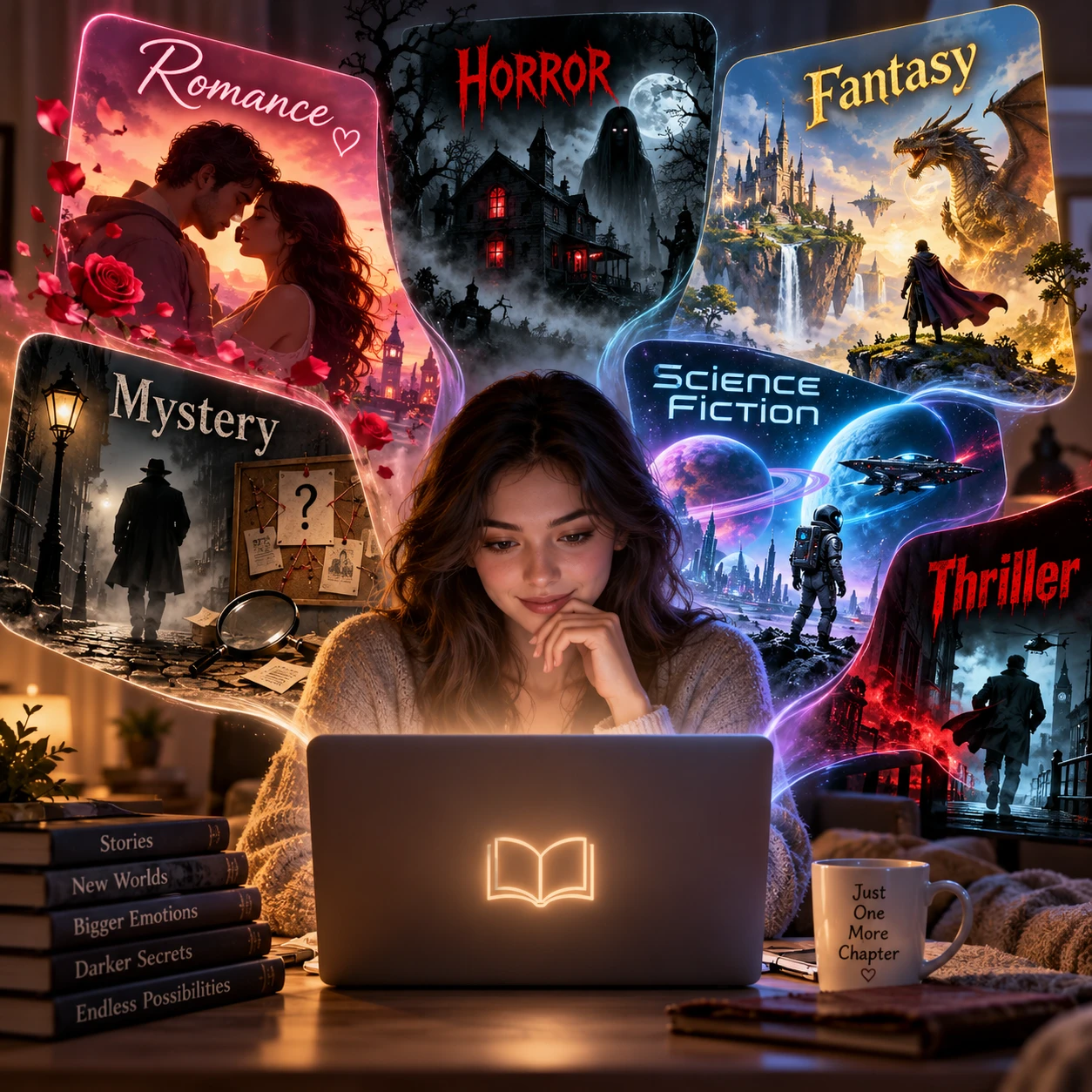
Choosing an online fiction story often starts with a simple question: what kind of reading experience do you want right now? Romance may offer emotional closeness, horror can create a delicious sense of unease, and fantasy can open a door to an unfamiliar world. Yet genre labels are guides, not strict rules. A story can surprise you by combining several conventions or shifting its mood along the way.
Understanding the differences between popular fiction genres makes it easier to find stories that suit your interests. Here’s how romance, horror, fantasy, mystery, science fiction, and thriller shape character development, story mood, and reader expectations, plus a practical way to choose what to read next.
What Makes a Fiction Genre?
A fiction genre is a group of stories that share recognizable themes, tones, settings, or storytelling conventions. These patterns help readers anticipate the kind of experience a story may offer, while leaving room for authors to bend expectations.
Think of genre as a set of signals rather than a checklist. A mystery often introduces a question or crime to solve; romance focuses on a developing relationship; horror creates fear, dread, or discomfort. Setting can reinforce those signals: a remote house suits a ghost story, while a bustling city might frame a contemporary romance or detective plot.
Story mood matters just as much as subject matter. Two stories about the same haunted village could feel very different if one is comic and the other bleak. Character development also shapes the experience. Readers may follow a protagonist as they learn to trust, confront a fear, solve a puzzle, or adapt to a strange new world.
Genre conventions are useful because they help readers choose, but they do not define a story’s quality or limit its possibilities. A writer might meet a familiar expectation, twist it, or combine it with another genre. When browsing online fiction, treat category labels as a starting point, then check the description for tone, themes, and content details.
Romance: Relationships at the Heart of the Story
Romance places a developing relationship at the center of the story and gives readers an emotional journey shaped by attraction, conflict, and connection. The plot may include many other events, but the relationship remains a key source of tension and change.
Common romance themes include trust, vulnerability, communication, belonging, and the decision to make room for another person. A story might follow strangers who grow close, rivals who reassess one another, or long-time friends who see their bond differently. The appeal often comes from watching characters reveal more of themselves and work through the barriers between them.
Romance can be light and playful, tender and reflective, or intense and dramatic. Its setting might be an ordinary neighborhood, a historical court, a distant planet, or a magical kingdom. Those settings change the details, but the emotional focus remains on the relationship. Some readers look for a gentle, reassuring mood; others enjoy uncertainty and high-stakes conflict.
Before choosing an online romance, look at the story description for the central pairing, the kind of conflict involved, and the overall tone. If you prefer a slower emotional build, a description that emphasizes instant attraction may not be your best match. Readers also have different comfort levels around themes such as jealousy, grief, or family pressure, so content notes can help you decide what feels right.
Horror: Stories That Build Fear and Suspense
Horror aims to unsettle readers through fear, dread, shock, or a sense that something is deeply wrong. It often builds tension by controlling what characters and readers know, then uses atmosphere and uncertainty to make danger feel close.
Some horror stories rely on the supernatural: ghosts, curses, monsters, or places with a threatening presence. Others draw fear from human behavior, isolation, or the collapse of a character’s sense of reality. A familiar home can become frightening when small details stop making sense. A quiet scene, handled well, can feel more disturbing than a sudden scare.
Atmosphere gives horror its texture. Dark corridors, unanswered messages, a deserted road, or a character who cannot trust their own memory can all contribute to unease. Suspense grows as the protagonist approaches a danger they may not understand. Readers who enjoy horror often appreciate the tension of waiting for an explanation, even when the answer brings fresh trouble.
Horror varies widely in intensity and subject matter, so one label cannot tell you exactly what a story contains. Check its description and any available content notes if you want to avoid particular themes or levels of violence. Choosing a milder, more atmospheric story can still deliver chills without the same emphasis on graphic detail.
Other Genres to Explore
Fantasy, mystery, science fiction, and thriller each offer a distinct kind of story momentum: imagined worlds, puzzles, speculative possibilities, or escalating danger. Their conventions help set expectations, though any one story can draw on more than one.
- Fantasy introduces magic, mythical beings, invented worlds, or supernatural forces. Readers may enjoy discovering how a fictional society works and seeing characters face the costs or limits of magic. Some fantasy uses an entirely new world; other stories bring the extraordinary into familiar surroundings.
- Mystery gives readers a question to investigate, often involving a crime, disappearance, secret, or unexplained event. Clues and revelations guide the plot. The pleasure comes from noticing details, testing theories, and learning why events unfolded as they did.
- Science fiction explores possibilities shaped by science or technology. A story might consider artificial intelligence, space travel, a changed climate, or life in a society with new capabilities. Its speculative premise often creates the central problem or changes the characters’ world.
- Thriller builds urgency through danger, pursuit, or a race against time. Characters may need to escape, prevent a threat, or uncover the truth before someone gets hurt. Fast pacing and rising stakes are common, though a thriller can also take time to deepen its characters.
These genres can appeal for different reasons. Choose mystery if you want to piece together clues, fantasy if you want an imaginative setting, science fiction if you enjoy exploring a what-if question, or thriller if you want sustained momentum. The best fit depends on your mood, not a ranking of genres.
When Genres Blend
Genre blending happens when a story uses conventions from two or more genres to create a layered reading experience. A romance can unfold in a fantasy kingdom, and a mystery can grow more unsettling as it takes on elements of horror.
Blending changes both the plot and the reader’s expectations. In fantasy romance, magic might shape how characters meet, what separates them, or what commitment means in their world. In a horror mystery, readers may search for clues while also wondering whether the threat can be explained at all. A science fiction thriller could combine a speculative technology with a race to stop its misuse.
When several genres appear in a description, look for the story’s main promise. Ask which element seems to drive the plot: the relationship, the investigation, the danger, or the imagined world. That can help you decide whether the blend matches what you want, especially if one genre is a favorite and another is less familiar.
Blending has trade-offs. A story with many ingredients can offer variety, but it may spend less time on any one convention. If you want a detailed puzzle, a mystery-romance may devote more space to the relationship than to clues. If you are open to both, that balance can be part of the appeal.
How to Choose Your Next Online Fiction Story
To choose an online fiction story, start with the mood you want, narrow the options by genre and themes, then read the description and any content notes before you begin. This quick check helps you find a better fit than relying on a genre label alone.
- Name your reading mood. Want comfort, tension, wonder, or a puzzle to solve? Mood can narrow a crowded list faster than choosing a genre first.
- Pick one or two genre signals. Look for terms such as slow-burn romance, haunted setting, magical quest, whodunit, or high-stakes thriller. Specific phrases often reveal more than a broad category.
- Check the central character and conflict. Ask what the protagonist wants, what stands in the way, and whether the description makes you curious about their choices.
- Review tone and content details. A dark premise can be written with humor, while a romance can address difficult subjects. Content notes help you avoid themes you do not want to encounter.
- Sample the opening. Read a few paragraphs to see whether the voice, pacing, and level of detail suit you. If the story is not clicking, it is fine to try another.
One common mistake is selecting a story by genre label alone. Two horror stories may differ sharply in intensity, and two romances may have very different emotional tones. Use the description and opening pages to check the actual reading experience.
Another is treating an unfamiliar genre as a commitment. A short story or opening chapter can be a low-pressure way to try science fiction or fantasy. You might discover that you enjoy a genre when it appears in a blend, such as a mystery with a romantic subplot.
Online fiction makes exploration easy because you can move between formats, moods, and categories at your own pace. Keep track of what works for you: a compelling narrator, a slow-building relationship, clever clues, or an eerie setting. Those preferences offer a more personal guide to your next read than any genre label can provide.